immigration Archives » Welcome to Serbia
Welcome Back to Serbia - guidance and support for Serbian diaspora, people of Serbian heritage, and individuals with connections to Serbia or the former Yugoslavia, helping you reconnect with your roots and navigate citizenship, documents, family matters, property, inheritance, relocation, and other essential services in Serbia.

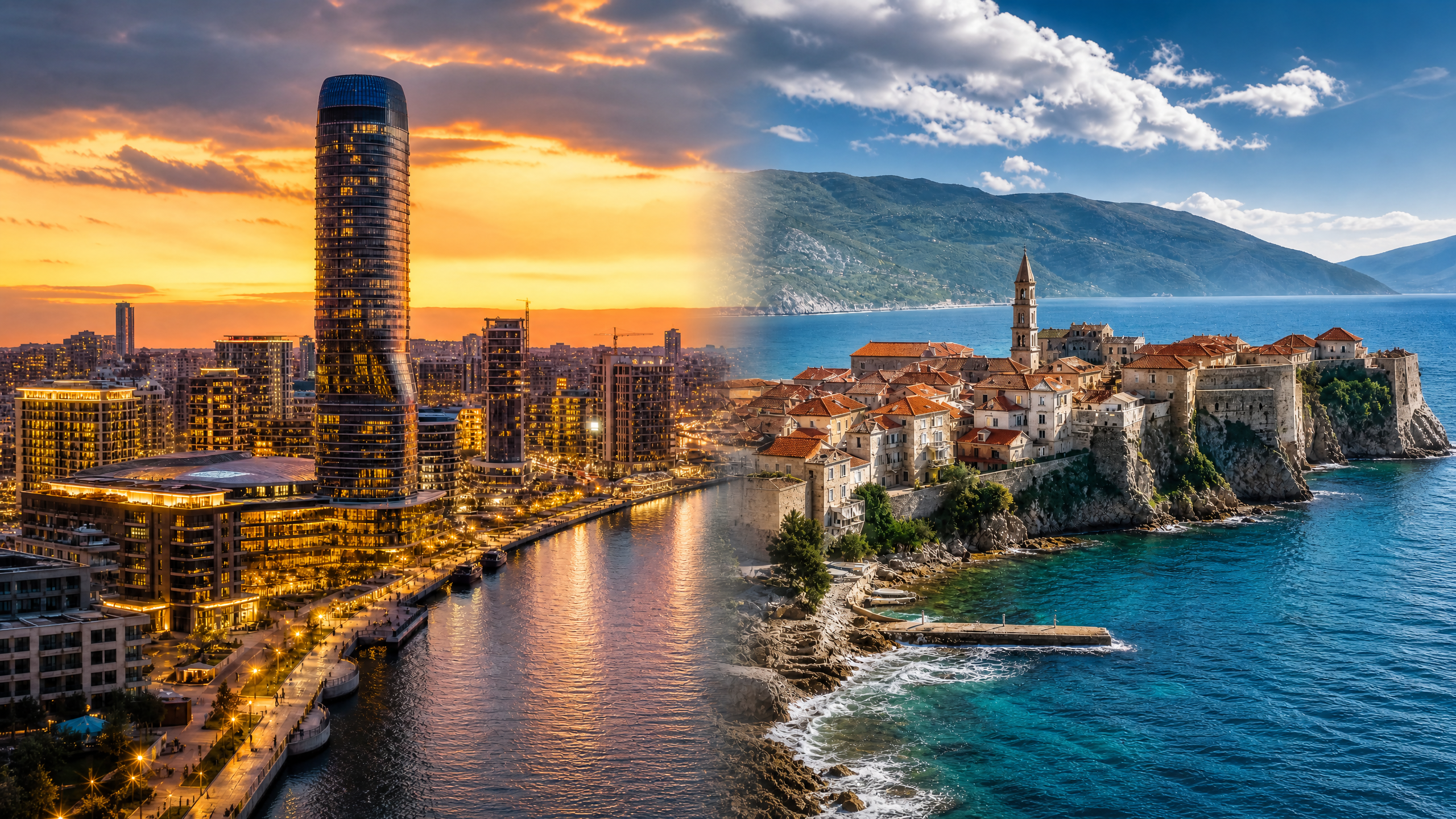
Serbia Surpasses Montenegro as the Leading Destination for Living in the Balkans

According to sources in Montenegro, Serbia is becoming the leading destination in the Balkans for citizens of the Russian Federation, gradually replacing Montenegro, which for many years had been considered the region’s most attractive country for purchasing real estate and long-term residence.


Although Serbia has no access to the sea – a factor that was previously one of the key considerations for Russian citizens when choosing a country to relocate to – numerous legislative changes introduced in Montenegro in recent years have significantly complicated, and for some categories of foreigners effectively prevented, obtaining and renewing residence permits.


As one of the most serious candidates for European Union membership, Montenegro has been rapidly aligning its legislation and public policies with EU standards. These changes have had a negative impact on Russian citizens. The new Law on Foreigners, previously introduced sanctions affecting Russian nationals, and plans to introduce a visa regime with Russia have contributed to an increasing outflow of Russians from Montenegro and a gradual shift in the country’s foreign population toward a larger share of citizens from EU member states and other countries.


According to some estimates, more than 14,000 Russian citizens have left Montenegro in recent years. The main reasons cited include difficulties in doing business, restrictive measures introduced by the new Law on Foreigners, rising living costs, and expectations of further price increases associated with Montenegro’s prospective accession to the European Union.


According to the same sources, most Russians leaving Montenegro have chosen Serbia as their new destination, where the conditions for doing business and obtaining residence permits are considerably more favorable. Spain has emerged as the second most popular destination, particularly among digital nomads, IT professionals, and young families.


Before this wave of migration began, just over 20,000 Russian citizens were registered in Montenegro, which represented a significantly higher share of the country’s population than the total number of Russian immigrants in Serbia.


Despite the outflow, Russian citizens still rank second among foreign nationals residing in Montenegro, behind only Serbian citizens.

The primary reasons Russians relocate from Montenegro to Serbia are more favorable conditions for financial operations and visa regulations. Serbia has maintained a fully visa-free regime for Russian citizens, allowing stays of up to 30 days with the possibility of so-called “visa runs” or extending legal stay through company registration. In addition, banking procedures for Russian citizens are considerably simpler and more accessible in Serbia than in Montenegro.


According to Montenegrin sources, Serbia has also been showing a trend toward faster naturalization, both through regular procedures and special government decisions. During the first five months of this year alone, 44 Russian citizens obtained Serbian citizenship, while from 2022 through mid-2026, the total number exceeded 300.


Most Russians relocating from Montenegro to Serbia re-register their IT companies or sole proprietorships in Belgrade and Novi Sad, taking advantage of Serbia’s simplified procedure for obtaining a unified work and residence permit. Similar procedures in Montenegro have become significantly less accessible as a result of the country’s alignment with European Union legislation and policies.

Global race for high-value talents and capital

Demographic change has become one of the most significant challenges of the modern world. In the 1960s, the global fertility rate averaged around five children per woman, while today it stands at approximately 2.2–2.3. The replacement level required to maintain a stable population is 2.1, which means that a growing number of countries are already facing long-term population decline and aging societies.


One of the few regions still recording high population growth is Africa, where the average fertility rate remains around four children per woman. In contrast, most developed economies are experiencing the opposite trend.


Demographics as an economic issue


Many countries are attempting to address declining birth rates through financial incentives and population policies, but with limited success. South Korea has invested more than 360 billion USD over the past two decades in measures to encourage childbirth, yet its fertility rate has fallen to around 0.75. Turkey has dropped to approximately 1.42, while the European average is about 1.34 children per woman – well below replacement level. The consequences of these trends are not purely demographic. Many countries are now facing labor shortages, slower economic growth, and increasing pressure on pension and healthcare systems.


To mitigate these challenges, many governments have significantly developed their immigration policies. Initially, the focus was primarily on filling labor shortages. Over time, however, strategies have shifted.


Today, countries increasingly compete for individuals who can generate new economic value—successful entrepreneurs, investors, business owners, highly skilled professionals, and individuals with international experience. Such individuals do not merely fill existing roles. They create companies, generate employment, transfer knowledge, and connect local economies with global markets. As a result, residence and citizenship by investment programs have become an important economic development tool for many countries, offering tax incentives, simplified procedures, and other benefits to attract this profile of migrants.


According to analysis by Henley & Partners, international migration of high-net-worth individuals has reached unprecedented levels. Alongside political stability and quality of life, key factors influencing relocation decisions now include taxation, legal security, business environment, and global mobility.


In an increasingly uncertain geopolitical environment marked by conflicts and shifting economic conditions, many successful individuals no longer think only in terms of a “Plan B.” Instead, an increasing number of them consider a “Plan C” – an additional option that provides greater security for their families, businesses, and long-term investments.


Serbia’s opportunity


Serbia has the potential to become part of this global trend. With its strategic geographic position, competitive business costs, growing economy, and improving business environment, it can represent an attractive destination for specific categories of international migrants. The key is to attract individuals who can contribute meaningful economic value through their expertise, capital, and global networks. Their arrival does not only increase population numbers, but also brings investment, job creation, knowledge transfer, and stronger international competitiveness.


This is precisely the profile of clients we most often work with. We assist investors, entrepreneurs, business owners, digital entrepreneurs, and highly skilled professionals in obtaining residence through various programs and in choosing Serbia as their new business and life destination. Our goal is to make the process efficient, transparent, and secure, while creating value both for our clients and for the local economy.


In a world where international mobility has become an integral part of long-term personal and business strategy, residence rights and second citizenship are no longer just administrative matters – they are strategic decisions. If you are considering Serbia as part of your Plan B or Plan C, our team can help you find the solution that best fits your business and personal objectives. Contact us!

//